ICABR Board
Executive Members
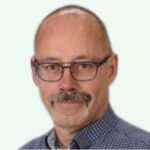
President
Stuart Smyth
University of Saskatchewan
Dr. Stuart Smyth is an Associate Professor in the Department of Agricultural and Resource Economics at the University of Saskatchewan, where he holds the Agri-Food Innovation and Sustainability Enhancement Chair. His research focuses on sustainability, agriculture, innovation and food. Dr. Smyth publishes a weekly blog on these topics at: www.SAIFood.ca. With well over 150 academic publications, Dr. Smyth is recognized as a leading expert on barriers to innovation and regulatory efficiency. Dr. Smyth specializes in research on regulatory barriers to food security, especially those that restrict investments into new plant breeding technologies, such as genome editing and that delay, or prevent, the commercialization of genetically modified and genome-edited crops. Dr. Smyth was recognized by the Agriculture Students Association in the University of Saskatchewan’s College of Agriculture and Bioresources as the 2022 Professor of the Year. Additionally, he was presented with the 2021 Champion Award by Farm and Food Care Saskatchewan and with CropLife Canada’s Grassroots Award for 2021.
I have been involved with the ICABR conference since I first attended as a graduate student in 2000. The conference brings together the world’s leading academics in both bioeconomy research and biotechnology research, resulting in this being the best conference to attend on these topics. I find it is possible to gain as much knowledge in three days of attending the conference as can be gained in a month’s worth of reading.
For the past three years, I have been the Secretary General of the ICABR. This involves working with the President and Vice-President to set the agenda for the monthly board meetings, recording the discussion and sharing the minutes of each meeting with all members of the Executive and Board. I additionally contribute to annual conferences through the organization of panel sessions and pre-conference sessions.
Having been extensively involved with the ICABR for more than 20 years, I believe that I will able to make a positive contribution to the future of the ICABR, which is why I am putting my name forward for Vice-President. As the conference begins to be held in new locations, I firmly believe this will contribute to growing the awareness about the conference and improve and increase the presentations each year. This will contribute to expanding the ICABR network of academics and researchers, creating greater opportunities for collaborations.
A key part of being able to hold the conference in differing locations is to be able build a strong base of financial support for the conference. As Vice-President, I would intend to focus on establishing a consistent base of fiscal support for the conference, which can be utilized to assist in keeping registrations as low as is possible.

Vice-President
Jose Falck-Zepeda
IFPRI
José Falck-Zepeda is a Senior Research Fellow at Transformation Strategies, International Food Policy Research Institute (IFPRI). He has a Ph. D./M.Sc. Agricultural Economics (Auburn University); B.Sc. Animal Science (Texas A&M University), and Agronomist degree (Zamorano University). He has worked with the International Service for National Agricultural Research (ISNAR) in the Netherlands, Auburn, and Zamorano Universities. Author of multiple peer-reviewed and other publications. He has made presentations in high-level global and national policy fora on the issue of biotechnology, biosafety, science, technology, innovation, R&D, and plant breeding in developed and developing countries. His expertise relates to the economic analysis of governance, regulations, and ag innovation adoption impacts. Highlights of his communication and outreach efforts include membership in the Committee commissioned by the US National Academies of Science that elaborated a report on genetic engineering, and in expert committees and high-level policy dialogues convened by FAO, OECD, APEC, IADB, and World Bank.
I propose four distinct areas in which to develop short- and long-term plans which can help secure the long term future of ICABR.
Financial: I propose setting up a task force that will develop within the two-year period of my tenure short-term and long-term plans for fund raising. The goal is to secure a healthy trust fund open to direct donations and funding, especially by non-traditional donors. This will imply conducting a landscape analysis of needs and issues which may attract such donors/investors in the private and public sector.
Academic: I propose increasing the academic standards for paper submission and developing plans for conference derived publications such as Conference Reports, special issues, books and slide decks/video focused on policy actions, issues and way forward.
Conference organization: I propose a serious analysis of the viability of having alternative timelines, venues, and modes of delivery. Having bi-annual with alternate online events beyond the current webinars are some of the potential opportunities.
Networking to CGIAR/IARCs and Low- and Middle-Income Countries research community: Explore potential collaborations with Latin America and Caribbean, South and Southeast Asia, and Africa regional and subregional organizations especially those connected to high-level policy events.
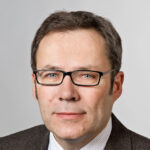
Previous President
Justus Wesseler
Wageningen University
I graduated in agricultural, environmental and natural resource economics in Göttingen. My research is on the economics of biotechnology, value chains, and regulatory economics including issues related to coexistence. I focuss on the contribution of value chains to sustainability, and the impact of new technologies.
A copy of my oration booklet is available in PDF.

Secretary-General
Diego M. Macall
ICTA-UAB
Diego M. Macall is a PhD candidate at the Institut de Ciència i Tecnologia Ambientals (ICTA-UAB) in Barcelona, where his research explores the potential of cities to achieve self-sufficiency in food production amid growing urbanization and climate change. He began his academic journey in Agricultural Engineering at the Catholic University of El Salvador, specializing in coffee production and processing, and later earned a Master’s in Agricultural and Resource Economics from the University of Saskatchewan. Diego has worked with the USDA Foreign Agricultural Service in São Paulo and as a research assistant in Canada on projects linking biotechnology, policy, and sustainability. He has co-authored 15 peer-reviewed articles and several blogs on food and agricultural policy, and is a founding member of the Salvadoran Biotechnology Network.
- I want to have a monthly webinar where a student that has been to an ICABR conference presents her/his research, and we upload this to the ICABR YouTube channel.
- I would like to expand the Central American researcher participation in the ICABR by hosting webinars in Spanish, from Central American Researchers that we could also upload to the ICABR Webinar.

Treasurer
Dušan Drabik
Wageningen University
Dušan Drabik is an Associate Professor in the Agricultural Economics and Rural Policy Group at Wageningen University, The Netherlands. His research interests are in agricultural economics and the economics of the circular bioeconomy. Dušan has published widely on the market and environmental effects of biofuel policies in several parts of the world and food commodity prices in the biofuel era. He is also interested in how the land markets in Central and Eastern Europe determine the agricultural production structure in that region. Since 2019, he has been a member of the Editorial Board of the European Review of Agricultural Economics and the President of the Association of Agricultural Economists in Slovakia.
The intense debate about the importance of the circular bioeconomy for the EU’s future has also been echoed in Central and Eastern European countries that are believed to have a competitive advantage in biomass production. However, policymakers and researchers there are just beginning to form the strategies and analyze the circular bioeconomies in their countries. As a member of the ICABR Board, I want to facilitate the knowledge transfer from the ICABR consortium to those European countries. I will also strive to engage more researchers and policymakers from that region in the ICABR activities.
Council Members at Large

Regina Birner
University of Hohenheim in Stuttgart, Germany
Regina Birner is Chair of Social and Institutional Change in Agricultural Development at the Hans-Ruthenberg-Institute of the University of Hohenheim in Stuttgart, Germany. Her research focuses on policies, governance and institutions that are essential for global food security and the bioeconomy. She has more than 25 years of empirical research experience in Africa, Asia and Latin America. She is a member of the Bioeconomy Council of the German Federal Government and the International Advisory Council on Global Bioeconomy (IACGB), which organizes the Global Bioeconomy Summit. Regina Birner holds a PhD in Socio-Economics of Agricultural Development from the University of Göttingen, Germany.
ICABR plays a unique role in promoting the bioeconomy, because it provides an international forum where scientific evidence on contested issues of the bioeconomy is discussed in an open-minded and constructive atmosphere. ICABR brings together senior researchers, young scientists and stakeholders from different parts of the world who are dedicated to promoting the bioeconomy for sustainable development. It would be a great privilege for me to continue supporting ICABR in this role. I would also be happy to contribute my experience as member of the German Bioeconomy Council and the International Advisory Council on Global Bioeconomy to ICABR’s Board.
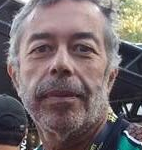
José Maria Ferreira Jardim da Silveira
Escola Superior de Agricultura Luiz de Queiroz. – USP
Professor Regina Birner is Chair of Social and Institutional Change in Agricultural Development at the Hans-Ruthenberg-Institute of Tropical Agricultural Sciences of the University of Hohenheim in Stuttgart, Germany. Her research focuses on policies, governance and institutions that are essential for food security and the bioeconomy in the Global South. She has more than 30 years of empirical research experience in Africa, Asia and Latin America and she has published more than 140 articles in international journals such as World Development, Food Policy, Journal of Cleaner Production, and Global Food Security. From 2012 to 2023, she has been a member of the Bioeconomy Council of the German Federal Government. She is also a member of the International Advisory Council on Global Bioeconomy (IACGB), which organizes the Global Bioeconomy Summit. Regina Birner holds a PhD in Socio-Economics of Agricultural Development from the University of Göttingen, Germany.
My objectives in remaining to be a member of the ICABR Board are to further develop ICABR as the primary global platform where the latest scientific evidence on the bioeconomy is presented and where different perspectives on the bioeconomy are brought together with the aim of encouraging a fruitful exchange. I also see a major role for ICABR in bringing the voice of science into global policy debates on the bioeconomy. Moreover, I remain committed to striving for a stronger participation of female and of young participants in the ICABR conferences and to leverage resources that will enable more participants from the Global South to become part of the global ICABR community.
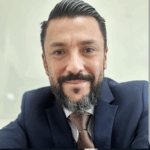
Hugo Chavarría Miranda
Inter-American Institute for Cooperation on Agriculture (IICA)
Hemispheric Program Manager for Innovation and Bioeconomy at the Inter-American Institute for Cooperation on Agriculture (IICA), a specialized agency of the OAS focused on agriculture. Member of the International Advisory Council on Global Bioeconomy (organizer of the Global Bioeconomy Summit), Executive Secretary of the Latin American Bioeconomy Network, and IICA representative in international bioeconomy and global innovation forums (International Bioeconomy Forum, GBEP, Latin American Circular Economy Coalition, FORAGRO, FONTAGRO, GFAiR, among others). Over 20 years of professional experience leading and managing research and investment projects across the Americas, particularly in bioeconomy, competitiveness, and the sustainability of agri-food systems. Holds a Master’s degree in International Trade, a Bachelor’s degree in Economics, and diplomas in public policy evaluation, environmental economics tools, and leadership. He has participated as an author or co-author in over 60 published documents, conducted numerous international seminars, and has been an instructor in various training programs throughout LATAM.
Strengthening Latin America’s Role in ICABR – Increasing LAC’s visibility to bring fresh perspectives, enhance ICABR’s annual conference, and connect regional experts with global bioeconomy stakeholders.
Integrating ICABR into IICA Initiatives –
- Capacity-building: Developing bioeconomy diplomas, postgraduate courses, and online training with leading universities.
- Research & innovation: Collaborating on bioeconomy assessments and technology applications in value chains like coffee, cocoa, livestock, and forestry.
- Seminars & conferences: Organizing key bioeconomy events, including the International Bioeconomy Conference LATAM and forums on biotechnology, biofuels, and gene editing.
- Global engagement: Representing LAC perspectives in the G20 Bioeconomy Initiative, Global Bioeconomy Summit, COP climate negotiations, and Global Bioenergy Partnership.
Leveraging IICA’s Infrastructure – Providing headquarters and 33 country offices for internships and academic sabbaticals, linking research with policy and rural implementation.
Enhancing Regional Networks – Supporting the Latin American Bioeconomy Network, connecting 70+ institutions across six priority areas:
- Bioeconomy principles & frameworks
- National & territorial strategies
- Metrics & monitoring systems
- Innovation & entrepreneurship
- Science & technology promotion
- Global positioning in forums like G20, COPs, and OECD
Additionally, I coordinate regional platforms uniting academic, public, private, and development actors, including the Hemispheric Platform on Bioinputs, Pan-American Coalition on Liquid Biofuels, FORAGRO, FONTAGRO, and the Tropical Agriculture Platform. ICABR plays a key role in shaping global bioeconomy research. I am committed to advancing its mission by linking academic knowledge with policy and real-world action.

Lorenza Lorenzetti
University of Trento
Lorenza Alexandra Lorenzetti is a post-doctoral researcher at the School of International Studies of the University of Trento (Italy). She holds a Bachelor and a Master degree in Economics from the Catholic University of Milan, and she earned a PhD in Economics from the University of Trento. Her interests and research are focused on agricultural economics, development economics, behavioural economics and, more generally, on economic policy. Despite being born and raised in Italy, her interest in and sentiment for agriculture and agricultural economics roots back to her early years spent in rural areas of Slovakia.
I owe Carl Prey a debt of gratitude for introducing me to ICABR in 2017. This gave me the chance to network with high-standing international scholars who share my interest in the primary sector and its innovations. What most impressed me was the group’s openness towards all scholars and to various
research contents: ICABR has always shown to welcome anyone who brings new perspectives and inventiveness.
The 2024 conference last year was especially successful, confirming ICABR’s receptiveness to knowledge contamination also from neighbouring sectors, making the conference a truly valuable opportunity for sharing scientific knowledge which in turn encourages creativity in research. It goes without saying that this love for research, innovation and open philosophy, along with my increasing involvement, have enhanced in me a sense of joyful belonging to the ICABR community. As a result, it is quite reasonable for me to hope that joining the ICABR board will enable me to contribute more regularly to its development.
Aside from the organization of the conference (particularly during the Italian seasons), I am eager to participate in the group’s ongoing development. To begin with, I would like to work on involving in the ICABR’s activities those Italian universities that are not currently taking advantage of this opportunity to exchange knowledge. I believe this would benefit both sides.
I also think it would be desirable if ICABR conferences received more media coverage and visibility, considering that the scientific information that is shared during the ICABR conferences is highly relevant, and hence of interest to an audience beyond that of academics only, not to mention the expendable names of some of its participants. Thus, I would like to implement a press office strategy
starting with local/national media. A greater visibility is functional to increase the ease of attracting and retaining sponsors, in addition to raising awareness and introducing the ICABR to new
stakeholders.
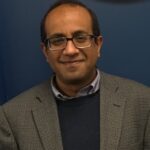
Anwar Naseem
Associate Professor of Economics at the University of Central Asia (Tajikistan and Kyrgyzstan)
Anwar Naseem is an Associate Professor of Economics at the University of Central Asia (Tajikistan and Kyrgyzstan). He is also a visiting faculty in the Department of Agriculture, Food, and Resource Economics at Rutgers University, Prior to joining UCA, he was an Associate Research Professor at Rutgers where he managed the Feed the Future Policy Research Consortium from 2014-2021. His research interests include agricultural development, science/innovation policy, and market structure/performance as it relate to agricultural input markets. He holds a Ph.D. in agricultural economics from Michigan State University, a M.Sc. from the University of Pennsylvania, and B.Sc. from McGill University.
I have been an active member of the ICABR community for nearly two decades, consistently participating in its annual conferences and various events. I am keen on helping commemorate ICABR’s upcoming 30th anniversary by conducting a bibliometric analysis of conference papers to document its intellectual contributions and map how bioeconomy and biotechnology research has evolved over three decades. This analysis would identify influential works, emerging research themes, and shifting focus areas that can inform ICABR’s future direction. Being on the Board would enable me to work closely with long-standing colleagues whose institutional knowledge would help place research developments in their proper context. Additionally, from my position in Central Asia, I would connect regional researchers to the ICABR network, expanding the consortium’s geographical reach and fostering bioeconomy research in this underrepresented region.
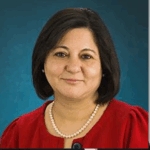
Madhu Khanna
University of Illinois at Urbana-Champaign
Dr. Madhu Khanna is the ACES Distinguished Professor of Environmental Economics in the Department of Agricultural and Consumer Economics and Alvin H. Baum Family Chair and Director of the Institute for Sustainability, Energy, and Environment, at the University of Illinois at Urbana-Champaign. She received her Ph.D from the University of California, Berkeley. Her research is at the intersection of agricultural, energy and environmental economics. She has served on the USEPA Science Advisory Board for 10 years and as a Chair/member of panels and advisory committees for NIFA, USEPA and NSF and the National Academy of Sciences. She has also served on the Board of Directors of the Agricultural and Applied Economics Association (AAEA) and the Association of Environmental and Resource Economists (AERE). She is a University of Illinois Scholar, a Stanford Woods Institute of Environment Leopold Leadership Fellow, AAEA Fellow and AAEA past President, and fellow of the European Association of Environmental and Resource Economists (EAERE) and member of the Board of Directors of the International Association of Agricultural Economics.
The ICABR serves a critical role for amplifying the importance of the bioeconomy for meeting the diverse goals of food security, energy security and climate change mitigation. It plays an important function in coalescing an international community of scholars working on the bioeconomy, enabling networking and collaboration and showcasing the latest scientific advances that can inform policy makers. It provides unique opportunities to meet regional scholars, exchange ideas and build a network of researchers from across the globe with common interests that extend beyond ICABR.
As a member of the Board, my goals would be to contribute to the vision and theme for each annual meeting and to develop a high profile and thought-provoking agenda for the annual meeting. I would aim to creating an environment for productive interactions and conversations at the annual meeting that would attract attendance. To keep ICABR as a vibrant consortium it is important to have a diverse membership that see value in being part of the organizations. As a member of the Board I would seek avenues for funding ICABR to lower cost of participation in the meetings. Last but not least, I would seek opportunities for the organization to be viewed as a leading science-based voice for the transition to a bioeconomy.

Vincenzina Caputo
Michigan State University
Vincenzina Caputo is a Professor and Homer Nowlin Endowed Chair in Consumer and Food Economics at Michigan State University. Her research focuses on understanding decision‐making processes governing food choices, developing methods to evaluate their impacts on food systems and policy, and translating findings into recommendations for industry, policymakers, and academia. Her work appears in leading journals including the American Journal of Agricultural Economics, Journal of Economic Behavior & Organization, European Review of Agricultural Economics, and Food Policy, among others. Her research is supported by private entities (Food Industry Association, Farm Foundation and various commodity groups) and public agencies (National Science Foundation and the United States Department of Agriculture). Beyond academia, industry leaders and policymakers seek her expertise to inform practice and policy. She is editor-in-chief of the European Review of Agricultural Economics, serves on the Agricultural & Applied Economics Association board, and co-directs the Survey Design and Experimental Methods workshop.
What is technically and scientifically feasible within the bioeconomy is not always what farmers and consumers want. Translating these insights into real‐world impact requires coordinated partnerships across academia, industry, and government, each playing its part in shaping research agendas, commercial strategies, and policy frameworks. Should I join the ICABR Board, I will pursue three main objectives alongside fellow members. First, in collaboration with the other board members, I aim to strengthen and expand the consortium’s industry–policymaker–academia partnerships by inviting leading industry executives and regulators as keynote speakers at ICABR conferences and by coordinating our research contributions to inform major policy forums. ICABR members are among the world’s leading scholars and practitioners, thus promoting regular dialogue with other bioeconomy stakeholders will translate our collective expertise into meaningful, real-world impact. Second, I aim to expand early-career engagement by creating dedicated ICABR student and young-professional networks. For example, co-hosting ICABR workshops and panels at AAEA and EAAE meetings will expose emerging bioeconomy scholars to our research and debates, ensuring the next generation of leaders is fully invested in the Consortium’s mission. Third, leveraging my dual perspective as a European working in the United States, I aim to promote cross-institutional synergies by launching thematic working groups—on consumer acceptance of genome-edited crops, bio-based energy solutions, and other priority topics—that unite ICABR member institutions across North America, Europe, and beyond. These groups will help catalyze joint research initiatives, co-authored publications, and targeted policy briefs, leveraging the Consortium’s transatlantic network to drive innovation and shape bioeconomy policy on a global scale.
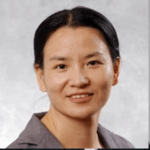
Yanhong Jin
Rutgers University
Yanhong Jin received her Ph.D. in Agricultural and Resource Economics from the University of California, Berkeley. She is a Full Professor in the Department of Agricultural, Food, and Resource Economics and a graduate faculty member in the Department of Economics at Rutgers University. Her research centers on applied microeconomics, focusing on agriculture, food, health, technology adoption, and the environment. Her bioeconomy research investigates key issues related to biotechnology innovation, agricultural R&D investment, agricultural productivity, and GMO adoption across firm, regional, national, and global levels. Her work provides policy-relevant insights into the economic and environmental implications of technological advancements and regulations in the bioeconomy. Dr. Jin has published in top field journals, including the American Journal of Agricultural Economics, Journal of Economic Behavior and Organization, American Journal of Health Economics, Agricultural Economics, China Economic Review, and Food Policy. She currently serves as an associate editor for Agricultural Economics. I am enthusiastic about the opportunity to join the ICABR Board and contribute my expertise in applied microeconomics, bioeconomy research, and policy analysis.
Contributing to ICABR’s Mission and Supporting its Operations
- Support ICABR’s role in advancing applied bioeconomy research and policy development.
- Contribute expertise in applied microeconomics, biotechnology innovation, and agricultural R&D to ICABR’s discussions and initiatives.
- Strengthen the connection between academic research and real-world policy implications in the bioeconomy.
- Collaborate with the executive and board members to a) support ICABR’s strategic initiatives, conferences, and publications; b) secure keynote speakers, organize panel sessions, and curate conference papers for biannual conferences; and b) engage in communications, fundraising, and knowledge-sharing events.
Expanding ICABR’s Influence and Outreach
- Facilitate interdisciplinary collaborations among members, institutions, and funding agencies to expand ICABR’s research capacity.
- Strengthen connections between ICABR and policymakers, industry leaders, and international organizations by providing data-driven, evidence-based insights on bioeconomy-related topics and policies.
- Promote ICABR’s work within academic and policy communities to enhance its visibility and impact.
- Foster engagement with early-career researchers and students interested in bioeconomy topics to support ICABR’s growth and sustainability.
Specific Actions and Tasks: If selected to join the ICABR, I would lead an initiative to enhance communication and knowledge-sharing by revising the ICABR website, launching an ICABR blog featuring members’ success stories, establishing a social media presence and organizing webinars promoting research and policy work of its members and bringing others’ research to its members.
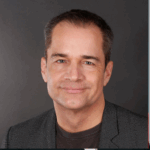
Philipp Aerni
School of Management Fribourg (HEG-FR)
Director of the Center for Corporate Responsibility and Sustainability (CCRS)
Philipp Aerni is Professor at the School of Management Fribourg (HEG-FR) and Director of the Center for Corporate Responsibility and Sustainability (CCRS) in Zurich. In addition, he is a lecturer at the University of Zurich as well as ETH Zurich.
Aerni studied Geography and Economics at the University of Zurich, obtained his PhD in Agricultural Economics at the ETH Zurich and was a postdoctoral fellow at the Harvard Kennedy School in den USA for two years (2000-2002). After his return from the United States, he continued his research at ETH Zurich, the World Trade Institute at the University of Bern and the United Nations (FAO in Rome). As an interdisciplinary and practice-oriented social scientist, his research focuses on the role of entrepreneurship, technology and innovation for sustainable development and the science-based evaluation of corporate sustainability.
He’s a member of the US National academy of Science, a Fellow of the AAEA, and the Association of Environmental and Resource Economists. He is among the Founders of the ICABR, and have consulted to governments and companies.
The International Consortium on Applied Bioeconomy Research (ICABR) provided me with the first opportunity to present the results of my PhD to an international community of academics and practitioners in 1998. The conference took place at the Tor Vergata University near Rome and Ravello with an impressive number of luminaries in the field of agricultural economics from Italy, Belgium and the United States. It was an important milestone and a memorable time.
Due to inspiring presentations and debates witnessed at ICABR as well as the beauty of the setting in Amalfi and its relatively short distance to Switzerland, I returned many times to present my research on
- attitudes towards sustainable agricultural and international trade,
- revealed consumer behavior toward GM food,
- biotechnology and moral development in Swiss high schools,
- global stakeholder perception on biotechnology and climate change
- •innovation in Times of Crisis. The role of international crop research networks
ICABR proved to be an important enabler of my career as an interdisciplinary social scientist and I am truly grateful for the support I received from many of its board members and executives.
I would therefore like to apply for membership in the board of directors and collaborate with the team to secure keynote speakers, organize panel sessions and select academic papers to be presented. There is one caveat: having three kids at home (age 4, 6 and 8) I may not always be able to travel overseas.
Depending on the resources available, I could however once organize a ICABR conference in Zurich, Switzerland (prospectively in 2028).
Friends of ICABR
Without the support of our friends, our consortium would be only half as successful. Learn more about the friends of ICABR.